The AI Writer’s Dilemma
This post is part of Bookscapades’ ongoing series on practical AI workflows for writers.
Eventually we all hit the same wall: Claude runs out of patience halfway through a scene, or ChatGPT forgets what happened three chapters ago. Both are brilliant in isolation but flawed in memory.
I’ve watched this play out in real time across a number of the Facebook groups I’m in. Someone posts a screenshot of Claude delivering absolutely gorgeous prose for the opening of their fantasy novel, only to follow up three days later asking why it suddenly “lost the voice” and started writing like a Wikipedia entry. Meanwhile, another writer swears by ChatGPT’s ability to maintain consistency across their entire thriller series, but admits the dialogue feels flat and the descriptions lack that visceral punch.
The camps form quickly. Team Claude insists nothing else can touch the quality of prose. Team ChatGPT argues that reliability and structure matter more than pretty sentences. Both sides have legitimate points, and both are missing the bigger picture.
Most writers pick a side. I picked a system.
Here’s what I’ve learnt over the past year of writing with AI assistance: the question isn’t which tool is better. It’s which tool is better for what. Once I stopped trying to force one model to do everything and started treating them as specialised collaborators, my productivity tripled and my frustration plummeted.
This isn’t about replacing human creativity. It’s about replacing the hours spent wrestling with blank pages, untangling plot holes at 2 AM, or rewriting the same transition scene for the fifth time because it still doesn’t flow. The AI handles the scaffolding. You handle the soul.
Section 1: Why Both Models Fall Short Alone
Let me be blunt: if you’re only using one AI model for your entire writing process, you’re working harder than you need to.
Claude’s Strengths and Stumbling Blocks
Claude writes like a dream. When it’s on, it delivers prose that feels genuinely literary, nuanced character voices, layered descriptions, emotional beats that land exactly where you want them. It handles long-form context better than most other models, which means you can feed it a detailed scene brief and trust it to maintain tone throughout.
But here’s the catch: Claude has a hard token limit, and when you hit it, the conversation essentially resets. You lose momentum. That character quirk you established 10,000 words ago? Gone. The subtle foreshadowing you carefully layered in? Forgotten. You end up spending more time re-explaining context than actually drafting new material.
I’ve also noticed Claude can be… precious. Ask it to write something dark or morally complex, and sometimes you’ll get a response that feels sanitised or overly cautious. It’s brilliant for literary fiction and character-driven stories, but it can struggle with genre conventions if they involve anything remotely edgy.
ChatGPT’s Power and Limitations
ChatGPT is the workhorse. It’s structured, adaptable, and remarkably consistent across long conversations. Need to track seventeen character arcs across a trilogy? ChatGPT won’t forget who hates whom by book three. Want to build out a magic system with internal rules and test it for logical holes? It’s on it.
The Custom Instructions and Memory features mean you can genuinely train it to understand your project over time. I’ve got mine loaded with my protagonist’s trauma backstory, my world’s political structure, and my preferred narrative style. Every time I start a new session, it picks up where we left off.
But—and this is crucial—ChatGPT’s prose rarely sings. It’s competent. It’s clear. But it’s not evocative. The descriptions tend toward the serviceable rather than the stunning. Dialogue can feel a bit too on-the-nose. Emotional beats sometimes land with all the subtlety of a sledgehammer.
The Core Problem: Context is King
Both models share the same fundamental limitation: they only remember what they can see in the current conversation window. Neither has genuine long-term memory in the way humans do. They can’t flip back to Chapter 3 and remind themselves how you described the rain unless you manually provide that reference.
This creates a bizarre paradox. The tools that are supposed to speed up your writing end up slowing you down because you’re constantly re-establishing context, correcting inconsistencies, and fighting against the model’s tendency to drift away from your original vision.
Unless, of course, you stop trying to make one tool do everything.
Section 2: My Workflow — The Hybrid Loop
Here’s the system I’ve developed after months of trial and error. It treats ChatGPT and Claude not as competitors but as specialists in a relay team, each handling the leg they’re best at.
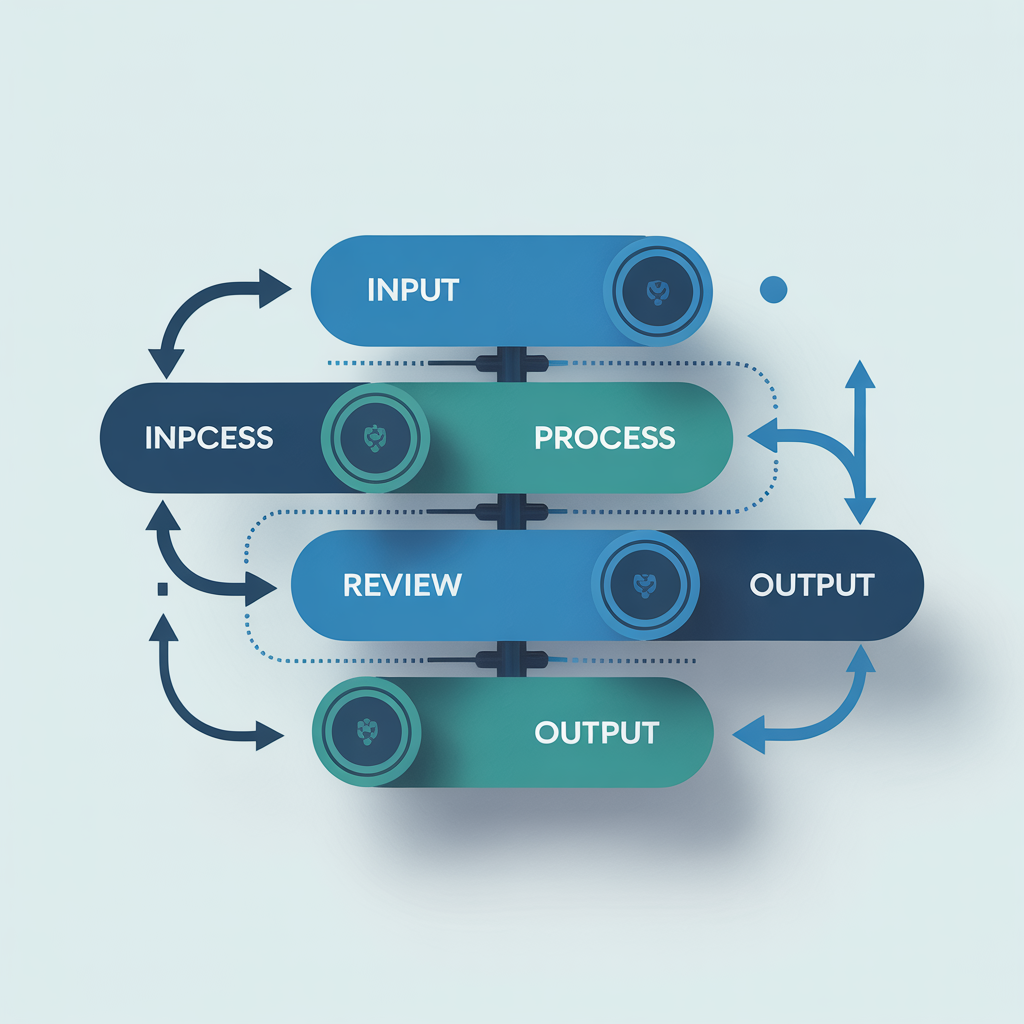
Step 1: Worldbuilding & Outlining in ChatGPT
ChatGPT is phenomenal at structure and organisation. This is where I build the skeleton of everything.
What I create here:
- Character dossiers: Not just basic stats, but deep psychological profiles. I’ll spend a session just interrogating my protagonist’s childhood trauma, asking ChatGPT to help me find the logical emotional consequences. I save this as a standalone document titled “Character_Alex_Complete.txt”
- Setting sheets: Everything from geography to political systems to cultural norms. For my current urban fantasy, I’ve got a 3,000-word document just on how magic is regulated by the government and what the black market looks like.
- Chapter-by-chapter outlines: Not rigid scene breakdowns, but flexible road maps. Each chapter gets 3-5 bullet points covering the emotional arc, key plot beats, and narrative purpose.
- Series bibles: If you’re writing anything longer than standalone novels, this is essential. ChatGPT helps me track timelines, maintain consistency, and spot potential continuity errors before they happen.
The key technique: I ask ChatGPT to export these elements in concise, dense formats. I don’t want rambling prose; I want reference materials that I can quickly feed into Claude later. Think of it like creating IKEA instruction manuals for your story world.
Example prompt I use: “Create a 500-word character reference sheet for [Character Name] that includes their core wound, primary motivation, speech patterns, and three specific mannerisms. Format it as a bulleted list optimised for quick reference.”
Step 2: Chapter Drafting in Claude
Now comes the actual writing. This is where Claude absolutely shines.
My process:
- Open a fresh Claude conversation (this is important—start clean each time)
- Load the relevant reference materials into the conversation. If I’m writing Chapter 7, I’ll paste in:
- The outline for Chapter 7
- Character sheets for everyone appearing in the scene
- Any relevant worldbuilding details (e.g., if they’re in the magic black market, I include that setting sheet)
- A brief 2-3 sentence summary of what happened in the previous chapter
- Give Claude a clear brief: “Using the context above, write Chapter 7 in a literary style with close third-person POV. Focus on building tension between Alex and Morgan while revealing the conspiracy subplot. Aim for 2,500 words.”
Why this works:
- Claude has everything it needs in one conversation window
- The prose maintains consistent quality because you’re not asking it to remember things from 50,000 tokens ago
- You get that beautiful, nuanced writing Claude is known for
- When you hit token limits, you simply start a fresh conversation with the same reference materials for the next chapter
Pro tip: I usually ask Claude for one chapter or one major scene at a time. Trying to get it to write multiple chapters in one go is where things start breaking down. Keep the scope manageable.
Step 3: Editing Pass Back in ChatGPT
Claude has given you gorgeous raw material. Now you need to refine it.
I copy Claude’s output and paste it back into my ongoing ChatGPT conversation (the one that already has all my world context and character information loaded).
What I ask ChatGPT to check:
- Pacing: “Does this chapter drag anywhere? Are there scenes that could be tightened?”
- Consistency: “Does this match what we established about Alex’s character in previous chapters? Check against the character sheet.”
- Clarity: “Are there any confusing transitions or unclear motivations?”
- Continuity: “Does this contradict anything from the outline or earlier chapters?”
ChatGPT is brilliant at this analytical work. It’ll catch things like “Actually, you established in Chapter 3 that Morgan doesn’t know about the conspiracy yet, but here Alex assumes she does.”
I also use this stage for line-level editing suggestions: tightening clunky sentences, varying sentence structure, catching repeated words or phrases.
Important: I don’t ask ChatGPT to rewrite the prose wholesale. That’s not what it’s good at. I ask it to identify issues, then I make the fixes myself (or occasionally ask Claude to rework specific passages if needed).
Step 4: Final Merge in Your Writing Software
Everything comes together in whichever tool you use for final manuscript assembly. I use Vellum but there’s also Ulysses, Scrivener, Word, whatever works for you.
This is where you:
- Assemble all the chapters in order
- Do your final polish and personalisation
- Add those little touches that make the voice uniquely yours
- Smooth out any remaining rough edges between AI-drafted sections
Here’s what I’m emphatic about: You remain the director of this entire operation. The AI models are specialists you’ve brought in for specific tasks, but you’re the one with the vision. You make the final calls on what stays, what goes, and what gets reworked.
If Claude writes a metaphor that doesn’t quite land, you fix it. If ChatGPT suggests cutting a scene that you know is emotionally essential, you override it. The system only works if you maintain creative control.
Section 3: The Real Benefit
After using this hybrid workflow for nearly a year, here’s what’s actually changed for me:
I finish things now.
That’s the headline. Before I developed this system, I had four half-finished novels sitting in various states of abandonment. Three of them died because I hit the “muddy middle” and couldn’t figure out how to untangle the plot. One died because I burnt out trying to maintain consistency across a complex cast of characters and simply lost track of who knew what when.
Since implementing the relay system, I’ve completed two full novels and I’m halfway through a third. The breakthrough wasn’t some magical AI that does everything—it was building a workflow where I never hit those creative dead ends.
Instead of chasing one perfect model, you build a relay system.
Each AI handles the part it’s good at. ChatGPT does the heavy structural lifting and analytical work. Claude handles the prose and emotional resonance. Neither one has to be perfect at everything. The handoffs prevent you from hitting either creative or technical walls.
When I reach Claude’s token limit, I don’t panic, I just take that output to ChatGPT for review, then start a fresh Claude session for the next chapter. When ChatGPT gives me workmanlike prose, I don’t accept it, I take that structure to Claude and ask for the lyrical version.
You spend time creating instead of troubleshooting.
Here’s what I don’t do anymore:
- Spend three hours trying to regenerate the “perfect” response from one AI
- Manually track every detail about my characters in complicated spreadsheets
- Reread entire manuscripts trying to spot continuity errors
- Stare at blank pages wondering how to translate the scene in my head into actual words
The AI handles the scaffolding—the outline, the structural logic, the first-draft prose, the consistency checking. I handle the soul—the unique voice, the thematic resonance, the emotional truth that makes readers care.
This method keeps the writer in charge.
And that’s non-negotiable. The moment you abdicate creative control to the AI—the moment you just accept whatever it generates without critical evaluation—you’ve lost the plot (literally and figuratively).
I treat ChatGPT and Claude like I’d treat a writing partner or editor: I value their input, I use their suggestions, but I don’t follow them blindly. If something doesn’t serve the story, it doesn’t make it into the manuscript, regardless of which AI generated it.
The system works because it augments human creativity, not replaces it. You’re not asking AI to write your novel. You’re asking it to help you write your novel faster and more efficiently.
Section 4: The Takeaway
AI isn’t replacing writers. It’s replacing wasted time.
Let’s be honest about what AI actually does: it handles the grunt work. The outlining that needs doing but isn’t particularly creative. The first-draft prose that gets the scene on the page so you can see what you’re working with. The consistency checking that’s tedious but essential. The research and worldbuilding documentation that keeps everything organised.
These are all tasks that writers have traditionally done themselves, not because they’re creatively fulfilling, but because they’re necessary. Now we have tools that can handle them, freeing us up to focus on the parts that actually require human creativity: the unique voice, the surprising character choices, the thematic depth, the emotional truth.
Once you treat tools like collaborators instead of saviours, you stop fighting them and start finishing things.
The writers who struggle with AI are usually making one of two mistakes:
- They expect AI to do everything and get frustrated when it can’t
- They reject AI entirely and miss out on legitimate productivity gains
The writers who thrive are the ones who’ve figured out exactly what AI is good at and built workflows that leverage those strengths whilst compensating for the weaknesses.
That’s what this hybrid system does. It doesn’t worship AI or blame it. It uses it intelligently.
Practical next steps if you want to try this:
- Start small: Don’t try to implement the entire system at once. Begin by using ChatGPT just for character development or outlining. See how that feels.
- Document everything: The system only works if you create those reference materials—character sheets, setting documents, outlines. Invest time upfront to build your story bible.
- Experiment with handoffs: Try writing one scene in Claude, then asking ChatGPT to analyse it. Get comfortable with moving material between tools.
- Stay in control: Never accept AI output uncritically. You’re the editor-in-chief. The AI works for you, not the other way around.
- Adjust to your genre: What works for my urban fantasy might need tweaking for your romance or thriller or literary fiction. Adapt the workflow to your needs.
The goal isn’t to find the perfect AI tool. The goal is to build a perfect system using imperfect tools.
And once you’ve got that system in place? You’ll wonder how you ever managed without it.